Mobs torch cars and homes in Belfast after a Sudanese asylum seeker, unknown to police databases, is charged with a brutal knife attack that officials insist is “not terrorism.”
Story Snapshot
- A Sudanese asylum seeker was charged with attempted murder after a Belfast stabbing left a local man badly injured.
- Police say there is no sign of terrorism, yet riots, arson, and anti-immigration chants spread across Northern Ireland.
- The suspect was granted a five-year permit to stay in the United Kingdom in 2023 after entering via the Republic of Ireland.
- The case exposes how loose Western immigration policies and online outrage can quickly turn one crime into street chaos.
Brutal street attack and fast-moving police response
Police in Northern Ireland say a man from Sudan launched a “horrific sustained knife attack” on a man in his 40s on a street in north Belfast around 10:30 p.m. Monday.[4][3] Officers arrived to find the suspect on top of the victim with a kitchen knife in his hand, according to a detective who later testified in court.[3] The victim, identified as Stephen Ogilvie, was rushed to the hospital with deep cuts to his head, face, back, and serious injuries to his eyes.[3][4]
The Police Service of Northern Ireland arrested a man in his 30s at the scene on suspicion of attempted murder and declared the incident critical, bringing in extra officers across the city.[4][3] Video of the stabbing spread online within hours, replaying graphic images on loop and fueling public anger.[3] Prosecutors later told Belfast Magistrates’ Court that the suspect had allegedly blinded Ogilvie in one eye during the attack.[2][3] The suspect declined a lawyer and did not enter a plea when he appeared by video link.[2][3]
Who the suspect is and what police say about motive
Court and police reports name the suspect as thirty-year-old Hadi Alodid, a Sudanese asylum seeker who came into Northern Ireland from the Republic of Ireland in 2023.[2][3] Police say he applied for asylum and was granted a five-year permit to remain in the United Kingdom.[2][3][4] Senior officers stressed they had checked national security databases and found no record of him, and that he was not previously known to the Police Service of Northern Ireland.[3][4]
Assistant Chief Constable Ryan Henderson said investigators were working with national counterterror teams but had “no information to suggest this was a terrorist-related incident.”[4][3] He explained that, at this early stage, they viewed the case as an attempted murder and stabbing investigation, not a terrorism plot, and they were not seeking any other suspects.[3][4] Police leaders urged the public to stay calm, avoid spreading rumors or graphic clips online, and let detectives do their job before jumping to conclusions about motive.[4]
Riots, arson, and anti-immigration anger in the streets
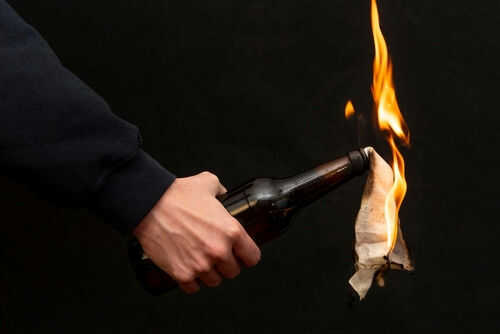
Despite the official tone of caution, the stabbing lit a fuse under long-simmering anger over immigration in parts of Belfast and beyond.[1][3] Protesters gathered soon after news of the arrest, many carrying anti-immigration signs and chanting slogans demanding that migrants be sent home.[6] In several neighborhoods, masked men set a bus and multiple cars on fire, blocked roads, and hurled objects at police officers trying to hold lines.[2][5]
Some rioters targeted homes they believed were occupied by immigrants, forcing firefighters to rescue residents from burning buildings in the middle of the night.[2][5] Local residents, including immigrants who have lived peacefully in Belfast for years, told reporters they were terrified to see their streets turned into battle zones over one crime.[3][5] Police declared a critical incident and boosted patrols “across Northern Ireland” as leaders warned that more unrest could follow if tensions did not cool.[2][3]
Leaders push calm as trust in institutions frays
Political leaders in the United Kingdom condemned both the stabbing and the violent response, but their message was mixed for many watching from abroad.[4] On one hand, they called the knife attack “horrific” and “sickening,” and promised that the victim and his family would get justice through the courts.[4] On the other, they warned that so-called “far-right” activists and outside agitators were using the case to stoke anti-immigrant hatred online and in the streets.[1][4]
Police and broadcasters repeatedly warned about “disinformation” and graphic videos circulating on social media that could inflame passions further.[4] That pattern will sound familiar to many American readers. A violent crime happens, officials release limited facts, and then online narratives rush in to fill the gap, often framing the story along immigration or identity lines well before the evidence is complete.[1] As in Belfast, the result can be real-world chaos, fear for law-abiding families, and deeper distrust of institutions already seen as too soft on border security.
Sources:
[1] Web – Cars burn in Belfast after a Sudanese immigrant was charged with …
[2] Web – Violent unrest breaks out in Belfast after Sudanese suspect arrested …
[3] YouTube – BELFAST RIOTS LIVE: City ERUPTS After Brutal Stabbing
[4] YouTube – Horrific stabbing attack sparks anti-immigration protests in Belfast
[5] Web – U.K. leaders call for calm as protests break out after Belfast street …
[6] YouTube – UK: Demonstrators Torch Vehicles, After Belfast Stabbing