President Trump told supporters the United States will “take care of Cuba” after Iran, outlining a possible naval “stopover” near the island and signaling a deal led by Secretary of State Marco Rubio.
Story Highlights
- Trump described U.S. warships making a brief stop near Cuba after operations tied to Iran, with specific imagery of a ship close to shore.
- Trump also said he expects a U.S.-Cuba deal and does not think military force will be needed.
- Multiple outlets reported the Fort Myers, Florida rally remarks and his earlier deal comments, confirming the core statements.
- No order or plan authorizing action has been publicly identified in the reporting.
Trump Signals Pressure And A Possible Deal On Cuba
President Trump told a rally in Fort Myers, Florida, that U.S. warships returning from Iran could “do a little stopover” near Cuba. He described ships passing the island and one pulling close, about 50 yards off the coast, while saying Secretary of State Marco Rubio would “finish up the deal”. The remarks put public pressure on Cuba while leaving room for a diplomatic track. The specific image of ships near the shore underscored a message of resolve and readiness.
Days earlier, Trump told reporters he expects the United States and Cuba will make a deal and said he does not think the military will be needed. That comment showed a clear preference for negotiation backed by visible strength. The combined record suggests strategic signaling: show force to prompt talks, then close with diplomacy. Reporters noted he also allowed that ships might not need to stop if talks advance, keeping options flexible.
What The Reporting Establishes — And What It Does Not
Associated Press, Canadian Broadcasting Corporation, Reuters, and other outlets reported the Fort Myers remarks and the related “we will make a deal” statement, offering consistent accounts of Trump’s words and the setting. These reports establish what the President said, when he said it, and how he framed Cuba in relation to Iran. The reporting does not cite an executive order, Pentagon directive, deployment order, or formal policy document authorizing action against Cuba.
This distinction matters for citizens who demand clarity from Washington. The words point to pressure and possible leverage at sea. The public record stops short of a formal operation. That gap reflects standard practice in foreign policy. Leaders use rhetoric and presence to shape choices without revealing every step. The coverage supports that reading: clear signaling, no published order, and open space for talks led by the State Department.
Why Cuba, Why Now: Strategic Stakes For The Hemisphere
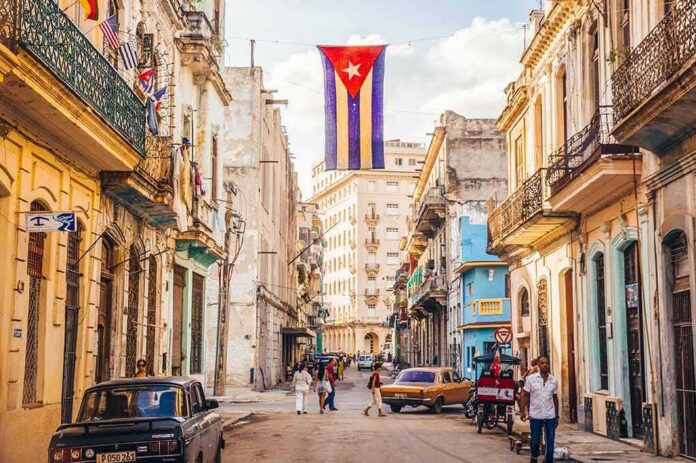
Cuba sits at the center of decades of tension in the Caribbean and the wider Americas. Rival powers have long tested the United States by moving pieces near our coast. Presidents have responded with sanctions, diplomacy, and, at times, military displays. Trump’s remarks fit that pattern: signal strength, pin down options, and push for a better deal for the United States. The reference to ships after Iran links two pressure points into one message of resolve.
For many Americans, especially those in Florida, the stakes are close to home. A stable, free, and accountable Cuba reduces threats, human smuggling, and criminal networks. It also checks hostile intelligence services that have used the island as a listening post. Trump’s call to “take care of Cuba” conveys that the United States will not accept a permissive zone off our shore. Rubio’s named role signals a Florida-informed approach backed by deep regional knowledge.
What Comes Next: Diplomacy Backed By Power
The most likely path, based on Trump’s own words, is a negotiated deal with pressure in reserve. Naval presence can speed talks without firing a shot. Statecraft works best when the other side believes time and leverage favor the United States. Trump’s framing does that. The administration can escalate visible measures if needed or ease them when progress is real. That approach gives Washington flexibility while keeping U.S. security first.
Trump at South Florida rally revives the idea of military intervention in Cuba after Iran https://t.co/NJyzXAI2Ud via @@YahooNews where is the money coming from for another GOP war by a President who wants a Peace Prize?
— Tim Fullerton, Sr. (@tfullertonsr1) October 24, 2026
Citizens should watch for three signs. First, statements from the White House or State Department that outline goals and timelines. Second, any public notice of ship movements tied to the Caribbean. Third, messages from Havana that show openness to concrete steps. Today’s record shows strong words, clear intent to negotiate, and no published order for force. That balance reflects a familiar American formula: peace through strength, with freedom and security as the goal.
Sources:
zerohedge.com, fortune.com, nbcmiami.com, en.cibercuba.com