
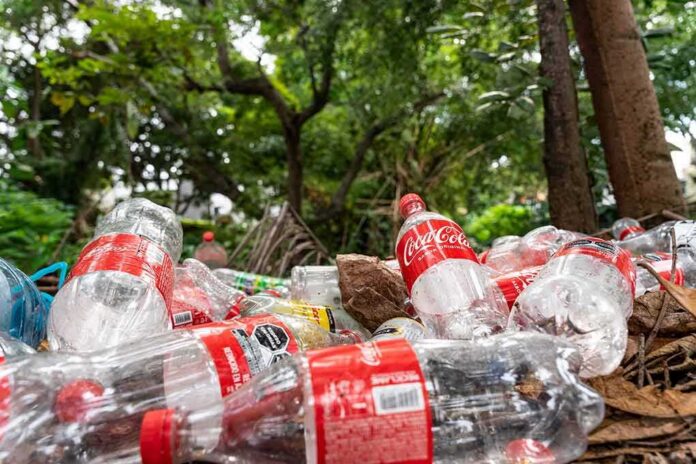
European Union pressure forced Coca-Cola, Nestlé, and Danone to fix “100% recycled” bottle claims that left out caps and labels.
Story Highlights
- European Commission said bottlers will clarify that “100% recycled” applies only to the bottle body.
- Consumer groups triggered the action with a greenwashing complaint filed in 2023.
- New labels will exclude caps and labels, which often are not from recycled plastic.
- Companies must update packaging, ads, and online claims across the European Union.
EU Coordination Pushes Bottlers To Correct Labels
European Commission officials announced that Coca-Cola, Nestlé Waters, and Danone agreed to change how they market recycled content on plastic bottles. The companies will add clear wording that “100% recycled” applies only to the bottle body, not the cap or the label. The decision followed talks led by the Swedish Consumer Agency and the Hungarian Competition Authority. The Commission framed the move as a coordinated consumer-protection action across the bloc.
European Union guidance also set expectations for how companies handle old stock in stores and warehouses. Officials said firms should act in a reasonable and proportionate way. That includes updating online product pages, adapting future packaging runs, correcting marketing materials, and posting clear notices at the point of sale where needed. The goal is to stop confusing claims for shoppers while companies phase in corrected labels.
Consumer Groups Sparked The Greenwashing Review
Consumer advocates lodged a formal complaint in 2023 against major bottled water brands over recyclability claims. The European Consumer Organisation and national members argued that “100% recycled” or “100% recyclable” wording misled buyers about what parts of a bottle are actually recycled, and how often recycling happens in the real world. Their complaint prompted the European Commission and national authorities to open a coordinated review of the labels and ads.
One key gap involved caps and labels. Consumer-group research found that caps and labels often are not made from recycled material due to food safety rules and supply limits. That means a simple “100% recycled” claim can sound total while excluding important parts of the product. The revised wording must now tell buyers when claims apply only to the bottle body, closing off a common source of confusion at the shelf.
Why The Wording Matters For Shoppers
Academic and legal reviews show many people read “recyclable” or “100% recycled” as a promise of likely outcomes, not just technical ability. Shoppers often think a product will probably be recycled or has no virgin plastic if the label hints at it. That gap between technical claims and real-world systems can mislead well-meaning buyers who want to reduce waste. Clearer labels can help people make honest choices with their dollars.
The European Commission says the companies have committed to tighter language near any “100% recycled” statement. Labels will state exclusions right next to the main claim, so buyers do not have to hunt for fine print. The change applies across packaging, online listings, and marketing. The approach aims to match what people assume when they read a clean, simple claim at the point of purchase.
What This Signals For Companies And Consumers
This case shows a broader shift in how regulators see green claims. Officials are moving from checking if a material can be recycled to checking if claims match what actually happens in collection and processing. That shift pressures brands to back up their words with data and to avoid sweeping slogans. It also rewards firms that design products for real recycling streams instead of just technical possibilities.
♻️ Coca-Cola, Nestlé and Danone have agreed to change how they communicate recycling claims on plastic bottles following EU scrutiny over potentially misleading environmental labels. 👉https://t.co/eRRlgqie7j
Claims such as “100% recycled plastic” must now clarify that caps and… pic.twitter.com/eJBHe3rpUP— EU Perspectives (@EUPerspectives) October 23, 2026
For American readers, the lesson is simple. Clear language protects consumer choice and keeps markets honest. Labels should say exactly what part of a product is recycled and how. When big brands clean up fuzzy claims, families can compare options fairly and avoid paying extra for a green halo. Strong, transparent standards let innovation thrive without government overreach, because truth in advertising is a basic rule of a free market.
Sources:
beuc.eu, commission.europa.eu, coca-colacompany.com, coca-cola.com