
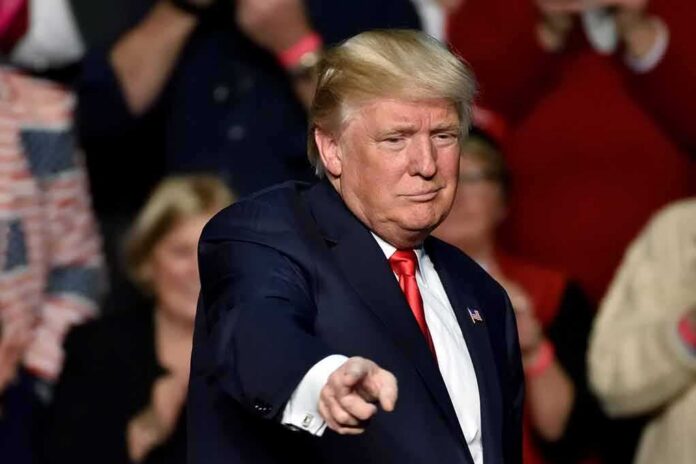
President Trump said he is ready to sit down with Xi Jinping and Vladimir Putin to talk denuclearization, signaling a hard-nosed push to reduce the world’s most dangerous weapons.
Story Snapshot
- Trump said he is open to a three-way meeting with Xi and Putin to discuss nuclear weapons and denuclearization.
- The proposed summit could happen as soon as next month, according to reporting at the time.
- Trump framed the talks as a chance to make the world safer and reduce nuclear risks.
- No formal date, agenda, or confirmed commitments were announced alongside the remarks.
Trump Signals Openness To Trilateral Nuclear Talks
President Trump told reporters on October 19, 2026, that he would join a three-way meeting with Chinese President Xi Jinping and Russian President Vladimir Putin to discuss nuclear weapons and denuclearization. He said, “If President Xi wants to have it, I’d have it,” making clear the White House is open to direct leader-level talks. Trump said the purpose would be nuclear issues, not a broader deal, though he added any steps that help end the war in Ukraine would be welcome.
Reporting the same day described the potential summit as possible “as soon as next month,” underscoring the urgency Trump attached to nuclear risk reduction. Outlets noted the proposed format would bring together the three nuclear powers with the largest global impact. The remarks placed denuclearization on the table but did not spell out limits, cuts, verification steps, or timelines. Trump cast the idea as a “very positive thing for the world” if it moved real reductions forward.
Scope, Timing, And What Is Not Yet Set
Trump’s comments established intent but not logistics. Reports said there was no fixed agenda, date, or confirmed acceptance from Beijing or Moscow at the time of his remarks. That means the proposal was open, not a scheduled summit. Trump also said the talks would be “not so much for Ukraine,” yet he linked any possible meeting to efforts that might help end that war, which left the scope broader than a narrow arms-control script.
The term “denuclearization” can mean many things, from reducing launchers to capping warheads to improving hotlines and test bans. Trump did not define the target, which leaves room for negotiation if talks begin. The immediate step is leader-level contact to see if there is a shared lane for risk reduction. Any deal would later need clear verification, since lasting limits require counting rules, inspections, and enforcement to protect American security and deter cheats.
How This Fits The Larger Nuclear Playbook
The idea echoes a long-running U.S. push to bring China into nuclear talks that for decades were mainly between Washington and Moscow. In 2019, Trump pressed for a three-party framework, but China resisted, arguing its arsenal was smaller than those of the United States and Russia. Analysts at the time said progress might start with simple guardrails and trust-building, then advance to formal limits as leverage and transparency improve.
A trilateral track would mark a break from the old two-power model, which capped the biggest arsenals but left China outside. If Beijing now joins leader-level talks, even for basic risk reduction, that could slow dangerous arms racing and reduce accident risks. If not, the United States can still seek updated, verifiable limits with Russia while pressing China for parallel transparency steps. Trump’s stated goal is to cut the danger and give Americans a safer world.
What This Means For American Strength And Security
Direct talks from a position of strength have long served U.S. interests. When the President sets clear objectives and red lines, diplomacy can reduce risks without giving up leverage. Trump framed the possible summit as a way to lower nuclear threats and protect families at home. He did not announce concessions. He put the onus on Xi and Putin to engage. If they agree, the White House will need a tight agenda and clear verification to defend U.S. security and taxpayer dollars.
Next Steps To Watch
Watch for a formal White House proposal, a response from Beijing or Moscow, and signs of allied consultation. Look for whether the agenda lists concrete steps like force caps, test constraints, or crisis hotlines. Also track whether Ukraine, missile defense, or space and cyber risks appear in the scope. If talks proceed, Congress will press for strong verification and no blank checks. If they stall, the United States can tighten deterrence while keeping the door open to real cuts later.
Sources:
youtube.com, scmp.com, politico.com, internazionale.it, transcripts.cnn.com, thewest.com.au, yahoo.com