Russia publicly labeled the reported presence of French troops inside Ukraine as “direct participation” in the war, raising the risk of a wider clash in Europe.
Story Snapshot
- Russia said reported French personnel in Ukraine amount to direct participation in war.
- French teams reportedly rotated into Ukraine to train troops and maintain advanced weapons.
- Reports describe the French role as non-combat, with no intent to use force.
- Small, recurring rotations suggest an organized mission known as “Volia”.
Russia’s Charge and What New Reports Claim
Russia’s foreign minister said France crossed a line by placing its personnel inside Ukraine, calling it “direct participation” in the war. The statement followed a string of reports that French troops have been in Ukraine for months. Outlets cited sources who said French teams trained Ukrainian forces and helped keep high-end gear running. The reports did not say those personnel fought in combat or picked targets. The contrast sets up a tense dispute over definitions and red lines.
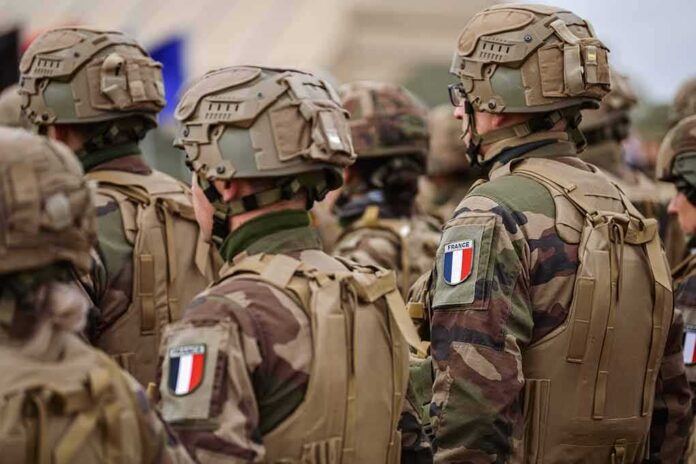
French public broadcaster coverage described a covert structure called “Volia.” It said Paris never openly confirmed boots on the ground but allowed small teams to rotate in for short missions. Those teams reportedly worked on complex systems France supplied to Kyiv. Training and tech support can shape the fight even if no foreign soldier fires a shot. Russia chose to cast that presence as part of the war effort, not just help from the sidelines.
What The Reported French Mission Did — and Did Not Do
Reports say the mission focused on training Ukrainian units and maintaining advanced equipment. One source familiar with the rotations stressed it was not a combat mission and involved no coercive action. The role fits a long pattern in modern conflicts, where partners send trainers and technicians while denying combat duties. That line matters under international law and alliance politics. Yet Russian leaders often treat any foreign military presence as fair game on the battlefield.
French rotations were described as small, modular teams moving in and out on a schedule. That hints at planning and state control rather than ad hoc volunteers. Outlets recapped the work as upkeep on key French systems and instruction for Ukrainian crews. The accounts did not name units, locations, or rules of engagement. The lack of public records leaves the size and scope unclear, but the structure sounds persistent, not a one-off visit or photo op.
Why This Matters for U.S. Interests and NATO Stability
American readers have seen this movie before. Advisors train partners. Opponents call them combatants. Then risks rise. Analysts warn that foreign personnel on the ground are a known trigger for miscalculation. One wrong strike can pull more nations into the fire. The West insists training support is legal and defensive. Moscow claims it proves outside states are part of the fight. The gap is both legal and political, and it can close fast under pressure.
For conservative Americans, the stakes are clear. Our troops should not slide into another endless war. Our allies must level with their voters and with us about missions that flirt with escalation. Europe needs strong borders, cheap energy, and honest budgets, not secret rotations that invite risk. President Trump has pushed allies to carry more of their own defense load. If allies choose riskier steps, they must also own the fallout, costs, and deterrence needed to back them up.
Fact Gaps, Conflicting Framing, and What To Watch Next
The press accounts rely on unnamed sources and do not show mission orders, unit rosters, or precise maps. They agree on the non-combat framing and the tasks: training and maintenance. They diverge from Russia’s charge of “direct participation,” which is more label than legal detail. Watch for on-record confirmation from Paris, any debate in the French legislature, and evidence of where teams operated. Clear rules of engagement would show how close they came to live combat.
Also watch for changes in Russian targeting rhetoric and any claims of strikes on Western personnel. An overt attack on a French team could force a hard choice for the North Atlantic Treaty Organization (NATO). That is the danger zone. A careful read of today’s reports shows no proof of French combat. But presence alone can change the map of risk. That is why verification, transparency, and limits matter now, before events make the definitions moot.
Bottom Line for Readers
Russia just raised the temperature by calling reported French teams in Ukraine part of the war. French-linked reports say those teams train and repair, not fight. Both things can be true at once: non-combat roles that still move the needle. The United States should keep focus on our security first, demand clarity from allies, and avoid mission creep. A sober policy guards our troops, our budget, and our peace, while keeping pressure on allies to be fully transparent and accountable.
Sources:
insiderpaper.com, naharnet.com, nampa.org