
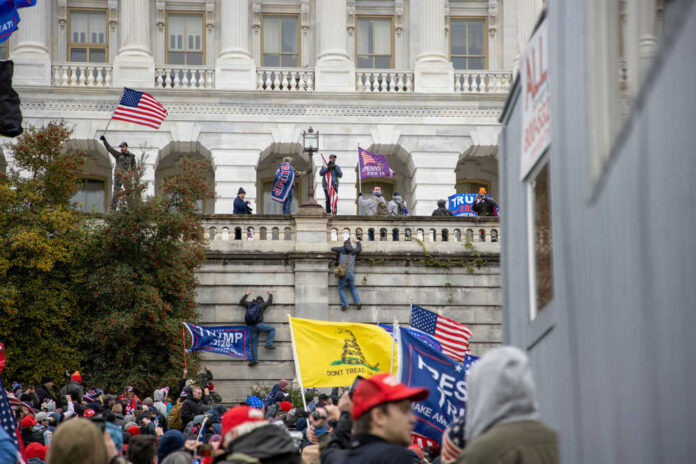
Five years after January 6, key records remain hidden or missing, and a new court fight aims to pry them loose.
Story Snapshot
- Forensic reviewers say 117 encrypted files tied to the January 6 probe were deleted before the handoff to Republicans [5].
- Republican investigators say some depositions and communications were not preserved as House rules require [2].
- Most raw files may sit at the National Archives for 30 to 50 years, far from public view [1].
- The White House offered unredacted transcripts only with limits that block disclosure of key details [4].
What the new motion seeks to uncover
Transparency advocates are moving in court to force disclosure of January 6 materials they say the public has been denied. The filing targets three gaps. First, it presses for a full accounting of 117 encrypted files that a digital team says were deleted before Republicans took control of the House [5]. Second, it seeks video depositions and agency communications that a Republican chairman says were not preserved [2]. Third, it challenges long-term archival rules that could block access for decades [1].
Supporters of the motion argue the public cannot judge the January 6 narrative without the underlying record. They point to a data shortfall during the committee handoff and claim it left only a partial archive. They also cite limits the White House placed on unredacted transcripts that bar disclosure of operational details and protect some witness identities [4]. They say those terms may be proper for safety, but they also restrict public review of how decisions were made on that day.
What is confirmed and what remains unclear
Local affiliates citing Fox News reported that digital forensics specialists recovered traces of 117 deleted documents and that Republicans received about two terabytes of data, less than expected [5]. House investigators also say some depositions and records were not archived with the Clerk as House rules require, though those rules can be loosely applied [2]. These claims raise real questions. Yet the full scope and content of the deleted items remain unknown, because the recovered files were encrypted and password-protected [5].
The public does have access to the committee’s official 845-page report and many transcripts through the government’s document portal [8]. That shows some transparency occurred. But large sets of raw materials, including videos and other sensitive content, were not released. Those files are slated for storage at the National Archives, where standard House rules can delay release for at least 30 years and up to 50 years if the records are deemed sensitive [1]. That timeline frustrates citizens who want answers now.
How the White House conditions affect access
In January 2024, the White House Counsel’s Office offered to let Republican investigators review unredacted transcripts. The offer came with conditions to keep four witnesses anonymous and to prevent disclosure of operational details [4]. The administration argued the limits protect safety and law enforcement methods. Critics counter that these terms block the public from seeing how security calls were made, who made them, and why. The standoff leaves key facts in a gray zone where only select staff can look.
That gray zone feeds doubt on both sides. Supporters of the original committee say safety justifies withholding some videos and details. They add that many materials remain available online, including transcripts and exhibits [9]. Skeptics note that access for a few officials is not the same as access for the public. They argue that when evidence sits behind redactions, passwords, or years of archival seals, faith in the process erodes fast.
Why this matters for trust and rule of law
The fight over records is not only about January 6. It is about whether Congress follows its own rules and whether citizens can audit government claims. When files are deleted, even if by error, people suspect a cover-up. When video depositions are missing from the archive, even if for witness safety, people question the story they were told. When key records are locked for 30 to 50 years, today’s voters cannot check what happened on their watch [1][2][5].
Conservatives should demand two things at once: protect witnesses and release the facts. Here is a sober path. First, have an independent digital audit verify the 117 deleted files and confirm total data volume, with a public summary that names categories but shields identities [5]. Second, require the National Archives to publish a neutral inventory of all January 6 holdings and their release dates [7]. Third, narrow the White House conditions so operational methods stay secret, but decision chains and timelines see daylight [4].
Sources:
[1] Web – Five Years Of Secrets: Motion Filed To Expose Hidden J6 Evidence The …
[2] Web – WHAT ARE THEY HIDING? Jan 6 Committee Sealed All …
[4] Web – Evaluating the Jan. 6 Committee’s Evidence, in Full – Lawfare
[5] Web – White House offers unredacted Jan. 6 transcripts to GOP — with …
[7] Web – House Jan 6 committee scrapped 100+ files before GOP majority …
[8] Web – Records Related to the Request for Presidential Records by the …
[9] Web – Attack on the United States Capitol – GovInfo