Only the righteous may enter the fifth‑century Christian church in ancient Olympus, and this uncompromising edict has resurfaced after 1,000 years and is shaking our understanding of early religious boundaries.
At a Glance
- Excavations in Turkey’s ancient Lycian port city of Olympus uncovered Church No. 1, dating to the fifth century CE
- At its entrance, a mosaic inscription reads: “Only those on the righteous path may enter here”
- The site has yielded richly decorated mosaic floors and inscriptions naming wealthy benefactors
- Olympus was inhabited until the 12th century and reflects layers of Hellenistic, Roman, and Byzantine architecture
A Gate of Judgment
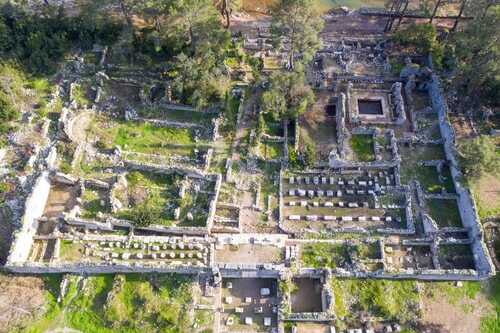
Archaeologists working at the Lycian city of Olympus, located in Antalya Province, Turkey, have restored the entrance mosaic of what’s now called Church No. 1, originally constructed in the fifth century CE. The threshold bears an explicit inscription translated as “Only those on the righteous path may enter here”—a moral injunction unseen in situ for more than a millennium. Recent excavations also revealed lavish botanical and geometric mosaics inside, along with names of patrons who funded the building, underscoring the affluence and civic pride of local Christian communities.
Read more: Newly Discovered Mosaics Reflect Early Christian History of Olympos · Archaeology.org
Faith, Identity, and Exclusion
Placed deliberately at the church’s main entrance, the inscription would have set a clear theological and social boundary. In late antiquity, early Christian communities were often in tension with local pagan practices—or even with intra-faith heresies. This mosaic message may reflect a public assertion of exclusivity, signaling who belonged inside the sacred space and who didn’t.
Similar to Second Temple “no‑stranger” warnings forbidding Gentile access, Christian design might evolve comparable forms of moral separation—though religious rather than purely ritualistic.
Cultural Continuity and Legacy
Olympus saw continuous habitation until roughly the 12th century, preserving layers of urban development from Hellenistic through Byzantine eras. The mosaics and inscriptions celebrate early Christian piety, yet also hint at the evolving role of community elites in church patronage. This find adds to a growing body of evidence illustrating how cities in Lycia used religious art to display both faith and status.
Why It Matters
The mosaic provides rare physical testimony of doctrinal boundary-setting in early Christianity. Mandating a “righteous path”—not merely ritual purity—suggests early spiritual gatekeeping. It may rewrite how historians interpret moral regulation within Christian communities in the fifth century. Additionally, the luxury of the mosaics and inscriptions affirms Olympus as a wealthy and culturally sophisticated ancient hub, underscoring that Christianity here wasn’t marginal, but central to civic identity.
Sources
Fox News
Popular Mechanics
Archaeology