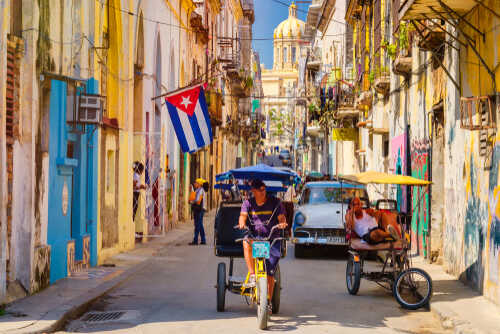
Get ready for Russia’s bold attempt to alter the global tech landscape by establishing a Silicon Valley alternative in Cuba, a nation struggling with blackouts and economic hardship.
At a Glance
- Russia proposes a tech hub in Cuba, dubbed “Cayo Digital,” targeting BRICS/EEU nations.
- The project aims to counter Western tech dominance and sanctions.
- Cuba’s crumbling infrastructure poses significant challenges.
- Completion is targeted by 2032, with phased development starting 2026.
Russia’s Ambitious Tech Play in Cuba
In a move that has left many scratching their heads, Russia has unveiled plans to establish “Cayo Digital,” a massive tech cluster on Cuba’s Isla de la Juventud. This isn’t just any tech hub; it’s a proposed alternative to Silicon Valley for nations within the BRICS and Eurasian Economic Union. The initiative is poised to focus on cutting-edge technologies like AI, digital art, and sustainable tech. Backed by Russian government ministries, the project is a bold attempt to bypass Western sanctions and establish a tech foothold in Latin America.
Russia Proposes Building a ‘Silicon Valley’ for BRICS Nations in Blackout-Plagued Cubahttps://t.co/4ju7CzgmpQ
— Michael P Bryant (@MichaelPBryant2) July 29, 2025
Now, let’s pause right here. The idea of building a high-tech oasis in a land plagued by relentless power outages might sound like something out of a satire piece. Cuba is currently in the throes of an economic crisis, with a power grid that’s about as reliable as a politician’s promise. Yet, here we are, with Russia spearheading this ambitious project, aiming for completion by 2032, with initial infrastructure developments kicking off as early as 2026.
Historical Ties and Strategic Motivations
Russia and Cuba’s relationship dates back to the Cold War, with both nations finding common ground in their resistance to U.S. sanctions. Fast forward to today, and Russia is looking to renew its strategic interests in Cuba, especially as both countries face increasing economic pressure from the West. By setting up this tech hub, Russia aims to expand its technological reach and strengthen its geopolitical influence in Latin America.
But let’s not ignore the elephant in the room: Cuba’s infrastructure is in shambles. The island’s frequent power outages and lack of resources make it an odd choice for a tech cluster. Despite these challenges, Russia, with its vested interest in circumventing Western tech dominance, seems determined to press forward. The project is also seen as a direct response to the growing distrust of Western technology in regions under U.S. sanctions.
The Stakeholders and Their Interests
The primary players in this venture are Russian government ministries, the Russian Agency for Strategic Initiatives, and GenIT, a software firm with links to the military-industrial complex. On the Cuban side, the government will provide land and regulatory support. For Russia, this project is about expanding its tech sector globally and cementing its influence in Latin America. For Cuba, it’s an opportunity to attract foreign investment, modernize its economy, and create jobs.
But with Russia as the primary financier and Cuba as the host, the power dynamics are clear. While the project is positioned as a multilateral BRICS/EEU initiative, it’s unmistakably Russian-led. This raises questions about the true motivations behind the project and the potential consequences for Cuba’s sovereignty.
Challenges and Concerns Ahead
Despite the grandiose plans, skepticism abounds about the project’s viability. Cuba’s infrastructure struggles are a glaring obstacle that cannot be ignored. There are also concerns about the potential for increased surveillance and political repression using Russian technology, which is known for its association with cyber-espionage.
If it comes to fruition, Cayo Digital has the potential to transform the region’s technological landscape, but what are the consequences? Independent evaluations express doubt, raising concerns about the project’s viability and its effects on Cuba’s already limited resources. Plus, this initiative might increase Cuba’s isolation from Western markets and intensify its reliance on Russia.