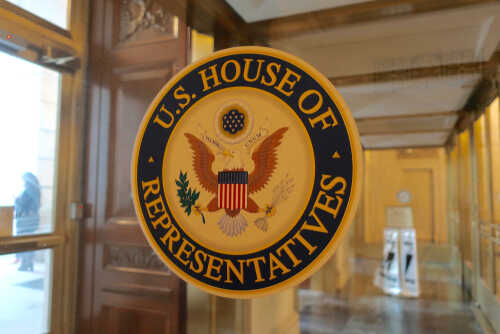
The House of Representatives held a formal debate on January 22, 2026, on a resolution that sought to limit the executive branch’s authority to take military action in Venezuela. The vote, which took place after a U.S. operation resulting in the capture of former Venezuelan leader Nicolás Maduro, highlighted legislative divisions within the majority party regarding the balance of power between the Commander-in-Chief and congressional oversight of military engagement.
Story Highlights
- The House of Representatives conducted a vote on a war powers resolution regarding U.S. military operations in Venezuela on January 22, 2026.
- The resolution, which aimed to require prior congressional authorization for force deployment in Venezuela, failed following a tie-breaking vote.
- Two Republican members, Rep. Don Bacon and Rep. Thomas Massie, voted with all present Democratic members in support of the resolution.
- The vote followed a U.S. operation that resulted in the capture of Venezuelan official Nicolás Maduro.
- Procedural actions by Republican leadership, including keeping the vote open for over twenty minutes, were utilized to secure the necessary votes.
- The resulting narrow margin of defeat underscored the current divisions within the majority party regarding executive military authority.
Narrow Vote Underscores Legislative Margin
The House vote on January 22, 2026, resulted in a temporary tie. Republican leadership worked to secure the presence of Rep. Wesley Hunt, who was campaigning for Senate in Texas, and whose arrival broke the deadlock. Speaker Mike Johnson held the vote open for over twenty minutes, a procedural action that Democratic representatives formally protested as potentially non-compliant with House rules. Hunt’s vote defeated the resolution, which would have required prior congressional approval before the President could deploy forces to Venezuela. The outcome underscores the narrow legislative margin held by the majority party, which has been impacted by recent resignations and deaths.
🚨 BREAKING: US House REJECTS War Powers Resolution to rein in President Trump's military actions on Venezuela, 215-215
GOP YEAs: Thomas Massie, Don Bacon
TRUMP WINS, AGAIN! 🇺🇸🇻🇪 pic.twitter.com/zz8QJZmQvy
— Eric Daugherty (@EricLDaugh) January 22, 2026
Party Members Support Resolution Limiting Executive Authority
Rep. Thomas Massie of Kentucky and Rep. Don Bacon of Nebraska voted against the majority of their party, joining every Democrat in supporting the war powers resolution. Rep. Massie, a known proponent of limiting executive authority, co-sponsored the measure with Democratic Rep. Jim McGovern. Rep. Bacon reportedly cited his frustration with the executive branch’s aggressive statements. These votes reflect a specific faction within the party that maintains reservations about the administration’s Venezuela strategy, in contrast to the majority of Republicans who supported the efforts to remove Maduro and secure critical energy resources for American and Venezuelan benefit.
Administration Defends Operation and Policy Objectives
Administration officials confirmed an operation capturing Venezuelan official Nicolás Maduro, which some Republican representatives characterized as a successful law enforcement action. The administration maintains that no U.S. ground troops occupy Venezuela, although military assets remain in the Caribbean Sea. House Armed Services Chair Brian Mast defended the action against Democratic criticism. The administration stated its intention to safeguard Venezuela’s oil industry for both American and Venezuelan benefit in response to Democratic accusations of resource acquisition. The administration also pledged to seek congressional approval for major operations while maintaining operational security for ongoing missions.
Legislators Seek Transparency and Invoke the 1973 Act
Democratic lawmakers cited the 1973 War Powers Resolution, enacted to reassert congressional authority over military engagements, as the basis for their action. Rep. Jim McGovern, the resolution’s sponsor, stated that the vote achieved “important progress” in forcing Republicans “on record,” and argued that the executive branch conducted strikes without notifying Congress within the required forty-eight hours. Rep. Gregory Meeks stated that the administration was seeking to “take Venezuela’s oil” and isolate the United States internationally. Thirteen Democratic senators, led by Adam Schiff, sent a formal letter to Chief of Staff Susie Wiles demanding transparency on any financial deals related to Venezuelan oil. Secretary of State Marco Rubio committed to briefing the Senate Foreign Relations Committee, which reportedly persuaded some senators in a similar, prior Senate measure that was decided by a tie-breaking vote from Vice President JD Vance.
This vote marks the second significant legislative challenge to the current administration’s Venezuela policy, following a December 2025 House rejection of a similar resolution and a Senate tie broken by Vance just days earlier. The ongoing debate tests the limits and enforceability of War Powers legislation, which presidents of both parties have historically disputed. The Democratic argument centers on the need for increased transparency and accountability for military operations.
Watch the report: War Powers Vote Fails To Pass House Of Representatives By Tight Margins
Sources:
- House Republicans barely defeat Venezuela war powers resolution to check Trump’s military actions – ABC News
- McGovern Statement on House Vote on Venezuela War Powers Resolution – Rep. McGovern
- Republicans sink effort to rein in Trump on Venezuela – Politico
- S.J.Res.98 – 119th Congress – Congress.gov