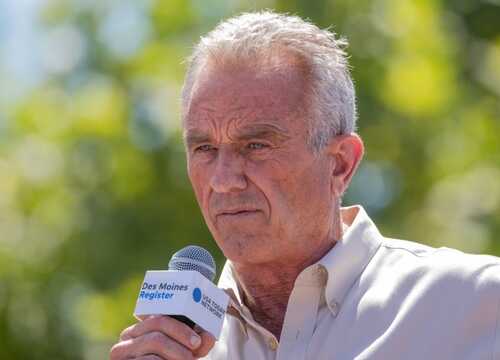
Health Secretary RFK Jr. defended his abrupt firings at the CDC during a contentious Senate hearing, as lawmakers accused him of undermining public health and spreading misinformation.
At a Glance
- RFK Jr. fired CDC Director Susan Monarez and the entire vaccine advisory panel.
- Bipartisan senators criticized Kennedy’s vaccine policy and leadership approach.
- Kennedy denied pressuring officials to preapprove vaccine recommendations.
- A top CDC official resigned in protest, citing politicization of public health.
- RFK Jr. defended his praise for Operation Warp Speed amid broader critiques.
Partisan Fury Unleashed
In a stormy appearance before the Senate Finance Committee on Thursday, Health and Human Services Secretary Robert F. Kennedy Jr. stood firm on his controversial overhaul of the Centers for Disease Control and Prevention. The hearing marked his first public defense since firing CDC Director Susan Monarez and disbanding the vaccine advisory committee.
Senator Thom Tillis led a wave of Republican skepticism, suggesting Kennedy’s drastic decisions contradicted the tone of his confirmation testimony. While Senator Bill Cassidy urged patience, tensions flared among GOP ranks, hinting at internal fractures. Democrats were less forgiving—Senator Ron Wyden accused Kennedy of dismissing science in favor of ideological purges, and pressed him over Monarez’s claim that she was ordered to rubber-stamp vaccine panel guidance.
Watch now: LIVE: RFK Jr. testifies before Senate amid CDC firings and …
Kennedy Strikes Back
Kennedy responded forcefully, dismissing Monarez’s accusation as a “lie” and portraying his moves as part of a needed cleansing. He called the CDC “compromised,” citing pandemic-era failures and alleged institutional corruption. The decision to dissolve the Advisory Committee on Immunization Practices (ACIP) was framed as necessary to restore scientific credibility.
Despite his defense, Kennedy’s rhetoric further ignited concerns about vaccine confidence. Senators Elizabeth Warren and Raphael Warnock condemned his remarks as dangerous, citing fears that public trust in immunization campaigns was being systematically eroded. The administration’s cuts to mRNA vaccine research fueled claims that Kennedy’s leadership is steering health policy toward politically motivated narratives rather than medical consensus.
Fallout and Contradictions
Outside the chamber, backlash intensified. Dr. Demetre Daskalakis, a top immunization official, resigned in protest earlier this week, warning that Kennedy’s actions politicized data reporting and endangered vulnerable populations. Media outlets highlighted the growing discord between the administration’s stated goals and its rapid dismantling of established scientific structures.
Kennedy further inflamed controversy by praising former President Trump’s Operation Warp Speed, stating the program deserved “global recognition” while simultaneously advocating limits on mRNA vaccine development. The contradiction did not go unnoticed, with critics from both parties labeling the message incoherent and politically opportunistic.