Saudi Arabia has launched a multinational maritime defense coalition to guard Red Sea shipping and energy routes, a move that could reshape who secures a vital global chokepoint.
Story Highlights
- Saudi Arabia unveiled a multinational maritime coalition to protect Red Sea trade lanes.
- Officials say 15 countries signed a joint statement, with 13 completing procedures to join.
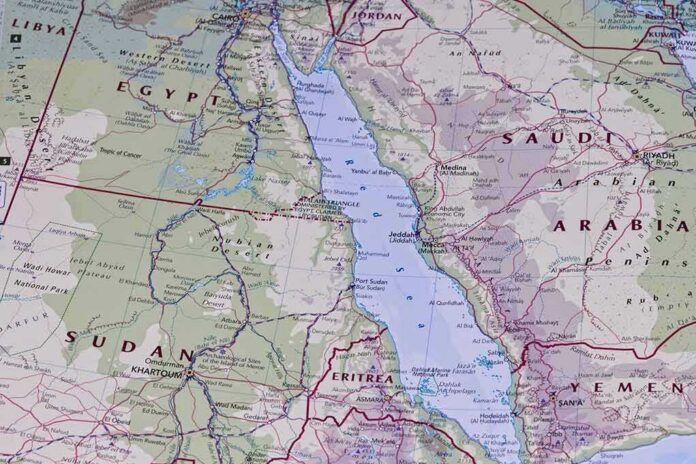
- The mission covers the Bab al-Mandeb Strait, the Red Sea, and the Gulf of Aden.
- Saudi Arabia will host the headquarters and named a naval commander to lead it.
Saudi Coalition Launch Targets Red Sea Threats
Saudi Arabia announced a new maritime coalition to protect shipping and energy flows after attacks in the Red Sea region. Reuters reported the plan on July 30, saying the goal is to shield international shipping and energy routes from disruption. The declared mission covers the Bab al-Mandeb Strait, the Red Sea, and the Gulf of Aden, all key waterways for oil and trade. These routes connect Europe and Asia. Any shock there risks higher costs for fuel, food, and goods worldwide.
Saudi messaging presents a formal structure with a launch timeline and a growing roster of states. Saudi authorities said that 15 countries signed a joint statement, while 13 completed their national procedures and officially joined. Reports also note broad outreach and attendance at planning meetings, showing more than a talk shop. The focus is on defensive patrols, shared intelligence, and coordination to keep vessels moving. The aim is to deter attacks and restore confidence for shippers.
Scope, Command, and Headquarters in Riyadh
Euronews reported that Saudi Arabia will be the founding and leading state and will host the coalition’s permanent headquarters, joint command, and operations center. That central hub matters. One chain of command makes faster calls at sea. Clear roles reduce gaps that bad actors exploit. Saudi Arabia also named Rear Admiral Abdullah bin Salem Al-Shehri as commander, adding a face and rank to the effort. That step signals the coalition intends to move beyond statements and into daily maritime management.
The coalition’s mission sits at a global chokepoint. The Bab al-Mandeb Strait is a narrow pass that carries energy and container ships between the Indian Ocean and the Mediterranean. Disruptions there hit wallets here at home. Higher shipping insurance and longer routes raise prices at the pump and the store. The coalition’s stated goal is simple: keep lanes open and reduce risk to crews and cargo. Success would help stabilize energy markets and cut pressure on inflation that hits American families.
Membership Numbers and What We Know
Member counts vary across outlets, but several agree the effort is real and organized. Al Jazeera said 15 nations signed a declaration and 13 had fully joined by mid-August. Reuters reported 14 signatories to a joint statement in support of the effort. Differences reflect timing and procedures across capitals. What aligns across reporting is the core: a Saudi-led structure, a defined maritime scope, and a command in place to manage operations.
Reports so far do not list every asset or budget line each country will provide. That is common in early coalition rollouts. Governments often phase in patrol schedules, intelligence-sharing rules, and logistics support. The central test is whether escorts, surveillance, and rapid response improve safety enough for shipowners to resume normal routing. Early confidence can bring lower premiums and shorter transit times, which eases costs for consumers.
What This Means for America and Allies
Red Sea security supports American interests, from energy stability to freedom of navigation. A regional partner stepping up can reduce the burden on United States carriers and crews. Conservative readers will welcome any move that protects trade without endless new United States deployments. Better deterrence at a chokepoint means fewer shocks that drive up gas, groceries, and shipping for small businesses. It also reinforces a basic rule: free seas are vital to free markets and strong families at home.
Saudi Arabia is establishing the command structure of a multinational maritime coalition intended to protect shipping around the Bab el Mandeb, Red Sea and Gulf of Aden.
Fifteen countries have signed its founding statement, while Riyadh has appointed a Saudi commander and… pic.twitter.com/aII7T8pena
— Frontline Radar (@frontline_radar) August 24, 2026
The coalition’s progress should be watched by Congress and by American industry. Transparent rules of engagement and clear communication with commercial fleets will matter. Results will show in shipping data, insurance rates, and route choices. If the coalition holds the line, traffic should normalize. If threats spike again, added coordination with United States and partner navies may be needed. For now, the facts are firm: Saudi Arabia has built a structured alliance, named a commander, and opened a headquarters to defend a critical waterway.
Sources:
realcleardefense.com, aljazeera.com, reuters.com, rt.com